
Learn how easy it is to cook roasted acorn squash! I’ll show you how to safely cut and maximize the flavor of this vegetable.

Jessica’s Recipe Science
- Skip salting the squash before roasting to avoid excess surface moisture. Salt draws out water, leading to steaming instead of browning and reducing those rich roasted flavors.
- Roasting at 400ºF with the cut side down lets it contact the hot pan directly, enhancing the golden-brown color and toasted flavor.
- Brushing maple syrup on the squash promotes caramelization, adding a complex, sweet flavor.
Jump To a Section
Why It Works
Acorn squash, or Cucurbita pepo var. turbinata, is easy to spot in the grocery store. The dark green skin, sometimes with patches of bright orange, has pronounced ridges running down the sides that taper at the bottom. And you guessed it, it resembles an acorn in shape.
Don’t be intimidated to grab one the next time you are at the store. This vegetable has a mild honeyed flavor and a creamy texture that goes well with savory or sweet seasonings, or better yet, both! For this recipe, I use a simple roasting technique to caramelize the cut sides, then drizzle them with maple syrup to enhance their natural sweetness. This is a delicious and simple side dish, or make a creamy soup or stuffed acorn squash for a heartier meal!
Ingredients You’ll Need
- Squash: When buying acorn squash, pick one up and make sure the texture feels hard. It should also feel relatively heavy, which signifies that it’s ripe and still has moisture in its flesh. The skin will be dark green, with occasional orange blemishes.
- Oil: Brush the cut acorn squash with fruity olive oil to prevent the flesh from drying out and the surface from browning.
- Seasoning: Salt and pepper enhance the squash’s sweet and savory taste. For the best flavor, wait to salt the gourd until after cooking to promote browning on the surface.
- Herbs: Garnish the roasted squash with chopped parsley.
See the recipe card below for all ingredients and measurements (US and metric).
Ingredient Substitutions
This roasted acorn squash recipe is easy to customize! Try these tasty options:
- Squash Swaps: If acorn squash is not in season, you can use other types of squash. Make a roasted whole butternut squash, delicata squash, kabocha, pumpkin, or honeynut squash.
- Oil: Try avocado oil, coconut oil, vegetable oil, melted butter, clarified butter, or homemade ghee.
- Seasoning: Add Cajun seasoning, cayenne, or chili powder for a spicy kick. Add dried alliums like garlic powder and onion powder. Add cardamom, ginger, nutmeg, allspice, mace, or pumpkin pie spice for a sweeter taste. Add Italian seasoning for a concentrated herb flavor. Grate parmesan cheese on top for a nutty taste.
- Herbs: Garnish with basil, tarragon, dill, chives, thyme, or rosemary.
- Nuts: For crunch, add chopped pecans, peanuts, cashews, almonds, or walnuts.
- Sauce: Serve with brown butter, chimichurri sauce, basil pesto, or green goddess dressing.
How to Roast Acorn Squash
Step 1: Heat the Oven
Position the oven rack in the center and preheat to 400ºF (204ºC). Line a large baking sheet with foil or parchment paper, then grease it with olive oil using a paper towel to spread it evenly, and set aside. This gives the flesh more surface area to contact the pan for better browning.
Step 2: Prepare the Squash
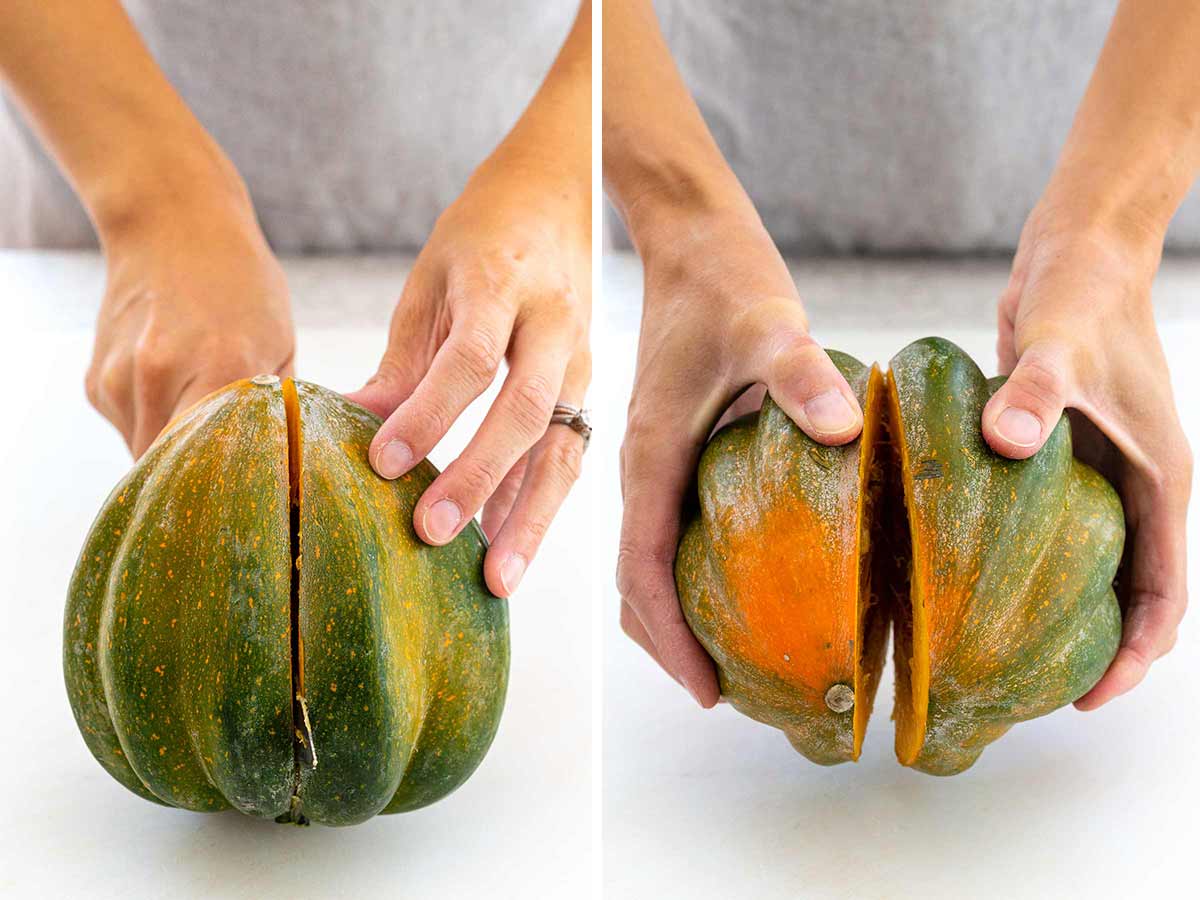
You don’t need to peel the squash. Acorn squash has thick skin and stems, so I like to use a sharp chef’s knife. I find it’s easiest to place it on a cutting board, then cut between the ridges, starting at the top near the stem and carefully continuing around it with gentle sawing motions.
Never actually try to cut through the stem! Instead, once you cut through the flesh, use your hands to pull the squash apart so that the stem separates in half.
Step 3: Remove the Seeds
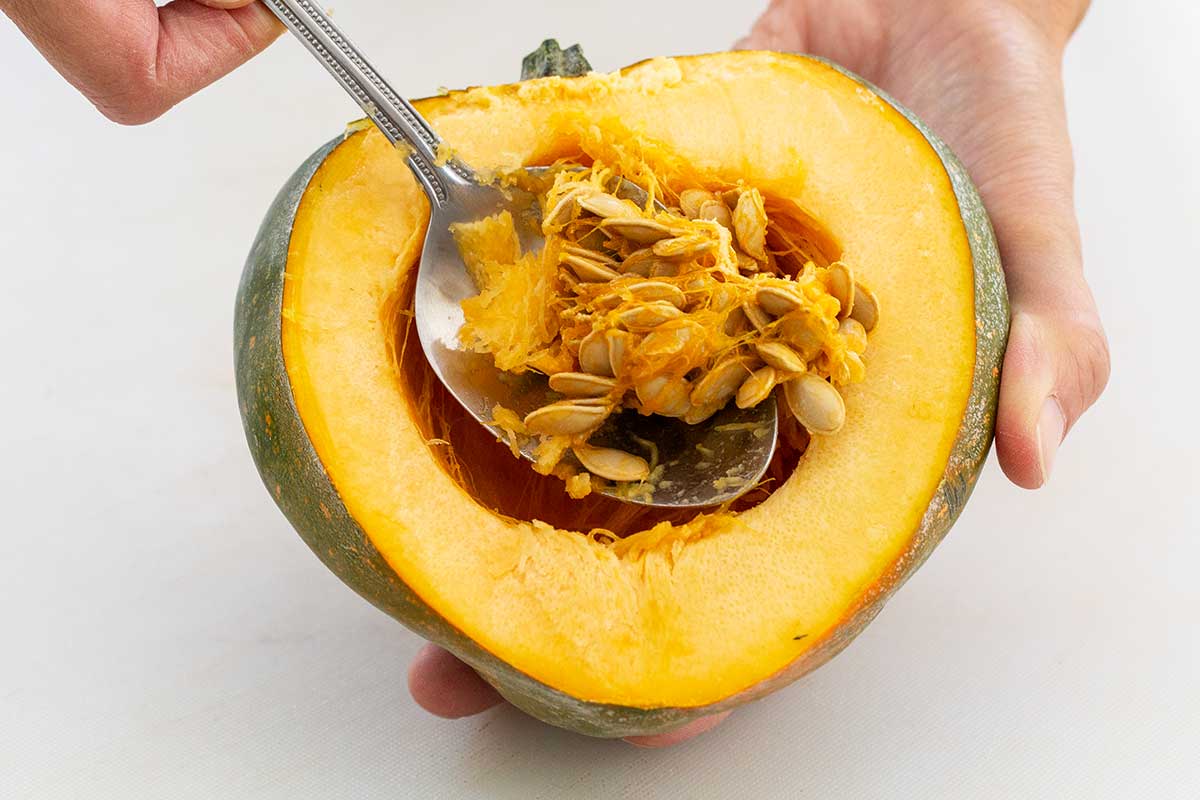
Like most squashes, the core contains edible seeds and stringy bits that you must remove. Use a spoon to scoop out the seeds until the squash is clean. You can wash, dry, and roast the seeds. For full instructions, check out my recipe for roasted pumpkin seeds.
Expert Tip: To roast the seeds, toss them with olive oil and salt or spices, and toast them until crunchy. This takes only 10 to 15 minutes; stir every 5 minutes, since acorn squash seeds tend to be smaller than pumpkin seeds. It’s a perfectly healthy, fiber-rich snack!
Step 4: Brush with Oil
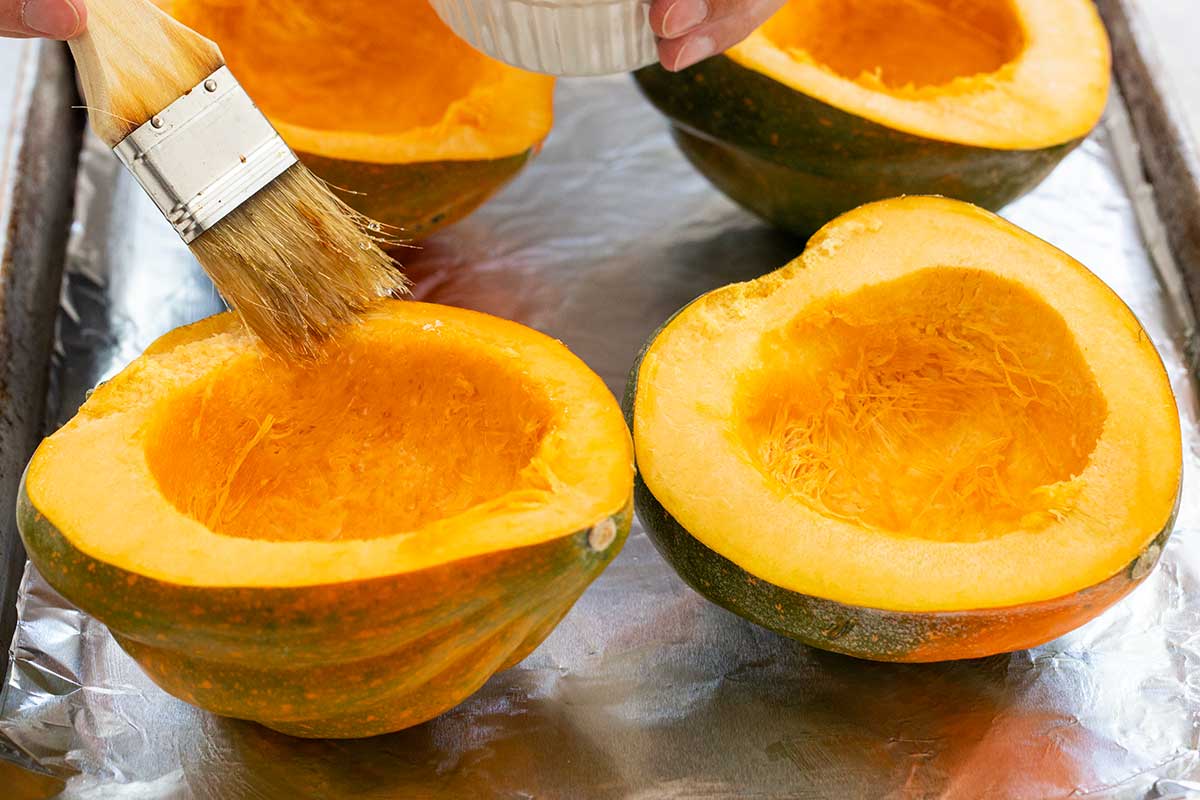
Brush the cut sides of the squash halves with olive oil to prevent sticking during roasting.
Step 5: Roast
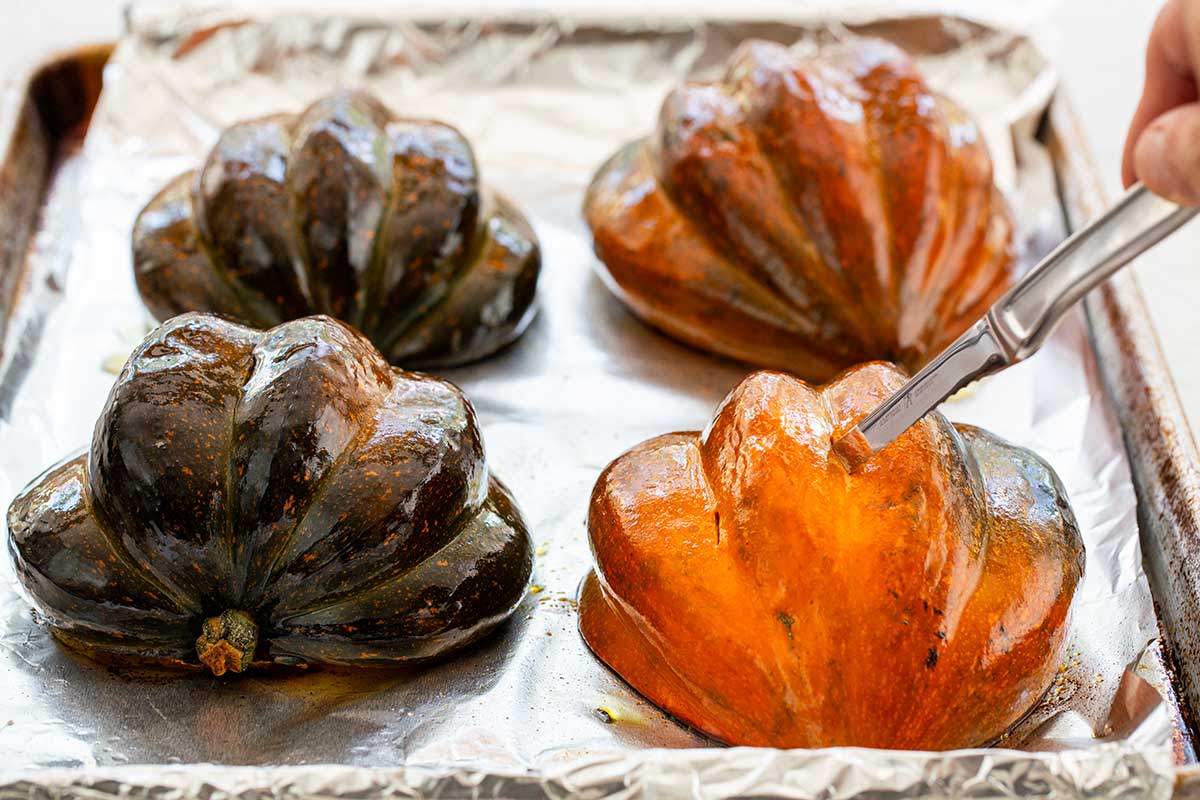
Place the halves cut side down on the baking sheet. This direct contact with the hot baking sheet enhances Maillard browning, adding a beautiful color and toasted flavor. I use the same technique to roast spaghetti squash. Roast for 30 to 45 minutes or until the flesh is tender. Test by poking the tip of a knife or fork through the skin—there should be little resistance.
Tips for Perfect Execution: I don’t salt the flesh before roasting because I want it to brown and not steam. Salt draws out the water inside the vegetable’s cut cell walls and brings it to the surface. If too much moisture stays on the surface as it cooks, those desirable roasted notes won’t be as intense.

Step 6: Add Maple Syrup (Optional)
After the squash is done cooking, sprinkle with salt and pepper. To take it to the next level, brush the cut sides with pure maple syrup and roast for a few minutes, until caramelized and bubbly. You can also use brown sugar or honey instead of syrup.
Step 7: To Serve
Sprinkle some spices like cinnamon, cardamom, nutmeg, ginger, or pumpkin pie spice for delicious autumn flavors. Or keep it savory with fresh herbs like chopped parsley, thyme, or chives on top, with melted butter or freshly grated Parmesan cheese. One of my favorite ways to use the vegetable is in my acorn squash soup recipe!
Frequently Asked Questions
Start by cutting the squash in half lengthwise with a sharp knife. From there, you have several options depending on how you plan to use it. For the easiest preparation, roast the squash halves whole, then scoop out the tender flesh once cooked. If you prefer smaller portions, cut each half into wedges or slices along the natural ridges before roasting. For soups and stews, carefully remove the thick skin with a small knife, then cut the flesh into cubes. You can also roast the squash in larger pieces with the skin on, then peel it off once the flesh is tender. Serve the roasted wedges as-is, or scoop out the cooked flesh and use it in other recipes.
No, you don’t need to peel the acorn squash. Peeling a raw acorn squash is challenging due to its ridges and dips. The skin will become tender after roasting, making it easier to scoop out the flesh or peel away the skin.
Roasting and baking achieve slightly different results. Roasting happens at higher temperatures, usually above 400°F, while baking typically occurs at 375°F or below. Higher roasting heat encourages deeper browning, bringing out a rich, caramelized flavor and speeding up cooking. Baking is gentler, so you won’t get as much browning, making it ideal for softer, less intense flavors.
Not only is it tasty and cute, but it’s also got some impressive nutritional stats. According to the USDA National Nutrient Database, one cup (205g) serving of cubed baked acorn squash delivers just 115 calories, 0.29 grams of fat, 29.89 grams of total carbohydrates, 9 grams of fiber, and 2.30 grams of protein. You’ll also get a good amount of vitamin A, niacin, vitamin C, and minerals like calcium, iron, magnesium, and potassium.
Store the cooled squash in an airtight container in the refrigerator for up to 5 days. It’s a great healthy vegetable to add to meal prep!
More Squash Recipes


If you tried this method for Roasted Acorn Squash in the oven, please leave a 🌟 star rating and let me know how it went in the 📝 comments below!
Roasted Acorn Squash

Ingredients
- 2 acorn squash, about 2 pounds each
- 3 tablespoons olive oil, divided
- kosher salt, for seasoning
- black pepper, for seasoning
- 2 tablespoons maple syrup, optional
- 1 teaspoon chopped parsley
Instructions
- Heat the Oven – Set the oven rack to the center position and preheat to 400ºF (204ºC). Line a large baking sheet with foil and grease it with 1 tablespoon of olive oil. Use a paper towel to spread the oil evenly across the foil. Set aside.
- Prepare the Squash – Wash and thoroughly dry the acorn squash, then place it on a sturdy cutting board. Using a chef’s knife, start cutting lengthwise on one side of the stem, positioning the knife between the ridges. Carefully slice through the skin and flesh, stopping once you reach the hollow center and avoiding the stem. Continue cutting around the squash with small sawing motions until you reach the other side of the stem, leaving the stem uncut. Use your hands to pull the two halves apart.
- Remove the Seeds – Use a large spoon to remove the seeds. If desired, wash, separate, and dry the seeds for roasting later.
- Brush with Oil – Brush the flesh of the acorn squash with 2 tablespoons of olive oil.
- Roast – Place the squash cut side down and evenly spaced on the baking sheet. Roast until a knife can easily pierce the flesh, about 30 to 45 minutes, depending on squash size. Carefully turn the squash over with tongs and season with salt and pepper.
- Add Maple Syrup (Optional) – Brush the flesh with maple syrup and roast until caramelized, about 5 to 10 minutes.
- To Serve – Season with more salt and pepper if desired, and garnish with parsley.
Notes
- Roasted Acorn Squash Seeds: Wash and dry the seeds. Toss in some olive oil and salt. Place on a sheet pan and roast at 350°F (177ºC) for 10 to 15 minutes, stirring every 5 minutes until crunchy.
- Storing: Store in an airtight container in the refrigerator for up to 5 days.
- Reheating: Microwave in 30-second increments until warm.
Nutrition Facts
Percent Daily Values are based on a 2000-calorie diet. All nutritional information is based on estimated third-party calculations. Each recipe and nutritional value will vary depending on the brands you use, measuring methods, and portion sizes per household.




Judy Caywood says
Jessica I have my acorn squash all ready to make right now. I’m looking forward to trying your recipe, as always. xo Judy
Jessica Gavin says
Did you enjoy the acorn squash Judy?
Judy says
I will make this for sure. Thanks for all the beautiful, tasty recipes. Xo
Dave says
Jessica, microwave it for 3-5 minutes. It cuts easily without the danger of slicing yourself.
Jessica Gavin says
Thanks for the tip Dave! I will definitely try microwaving first next time.
Jerry says
I like to put the acorn squash in the microwave to soften it. Cutting it in half and removing seeds is then much easier and safer. It truly is a delicious veggie.
Jessica Gavin says
Interesting Jerry! How long do you microwave the acorn squash for?
masaye says
Jessica , is acorn squash a starch side dish like potatoes or more of a vegetable side dish ? Thank you !
Jessica Gavin says
Its sort of like a sweet potato meets butternut squash in texture. The roasted halves can be scooped out like potatoes, or sliced for more of an intact side dish.
Troy says
You can also stuff it with a meatloaf.
Jessica Gavin says
Do you stuff the raw squash with the meatloaf Troy? What time and temperature do you use? Sounds delicious!