
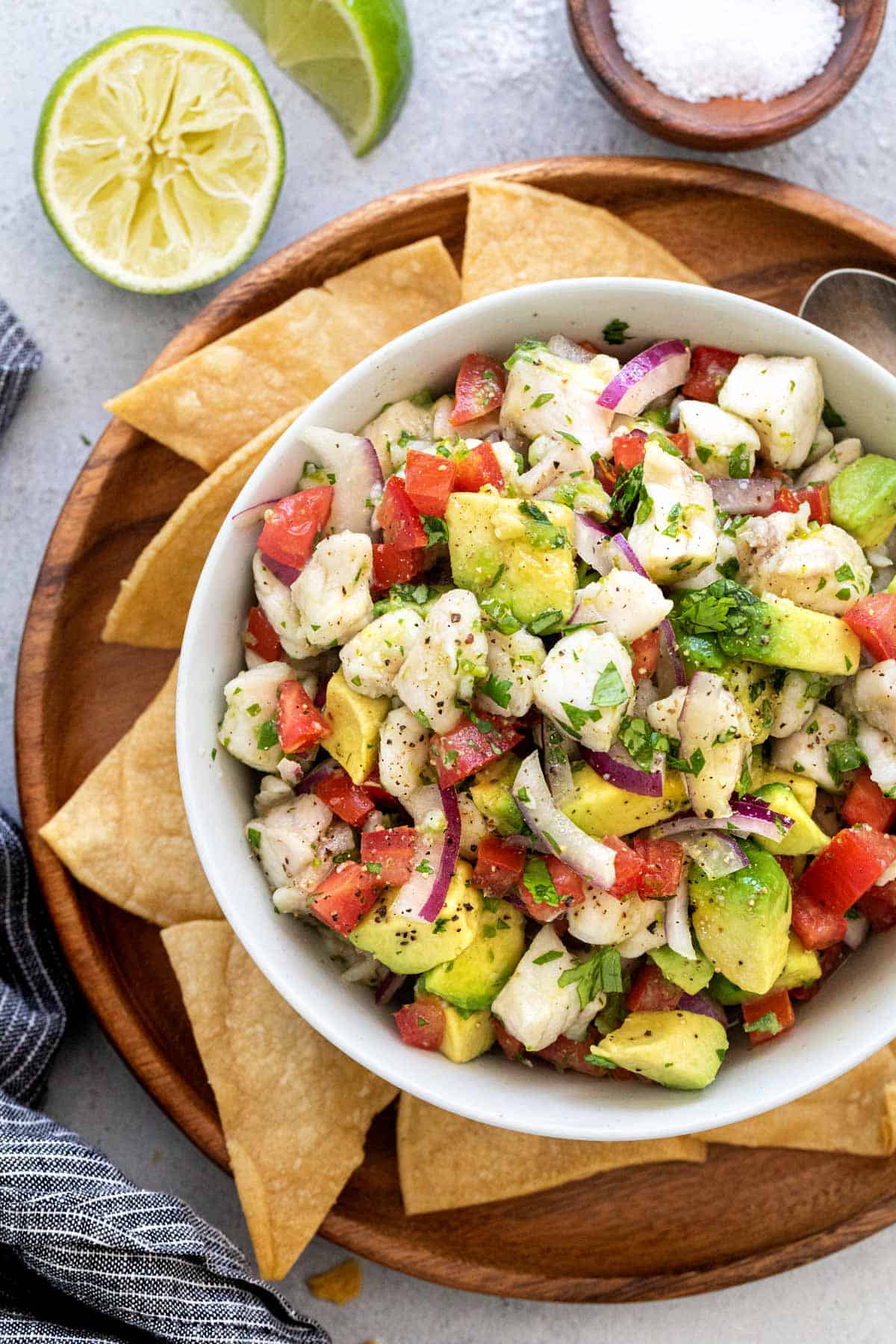
For this fish ceviche recipe, red snapper is marinated in freshly squeezed citrus juice, then mixed with a medley of chopped vegetables and fruit. This appetizer is best served with tortilla chips or tostadas for extra crunch!
Jessica’s Recipe Science
- Dicing the fish into small, even pieces increases its surface area, allowing the citric acid to penetrate more efficiently.
- Citric acid in citrus juices rapidly denatures fish proteins, turning the surface opaque and slightly firm, “cooking” the flesh.
- Marinating the fish first sets the proteins before adding mix-ins like onions, tomatoes, and avocado. This preserves their fresh texture.
Why It Works
I first tried ceviche on a deep-sea fishing excursion in Panama. The captain made us a quick lunch on the boat with our fresh catch from the ocean. He simply chopped up the fish, squeezed some lime juice, and tossed it with ripe tomatoes and onions.
The nice thing about this dish is you don’t have to fire up the stove. Just grab a knife and a cutting board, and you are set. I use chopped pieces of red snapper marinated in a trio of juices for my version. Add generous scoops on top of tostadas for a leisurely lunch or dinner, or an irresistible shareable dip with chips.
Jump To a Section
Ingredients You’ll Need
- Fish: This recipe for ceviche uses firm white fish in saltwater, such as red snapper, halibut, sea bass, grouper, mahi-mahi, or flounder. Salmon can be used, but it will be richer in flavor. Don’t be afraid to ask the fish market what their freshest fish is and mention that you’ll be using it for ceviche.
- Citrus: I use a combination of fresh lime, lemon, and orange juices. Lime zest adds a lingering citrus note from the essential oils in the skin.
- Vegetables: Thin slices of red onion add crunch and pungency, diced tomatoes add juiciness, and avocado delivers a creamy texture.
- Spice: Minced chili peppers, like jalapeño, add a spicy kick to the ceviche. I remove the seeds so it’s not too hot, but you leave it in for a lingering heat.
- Seasoning: Kosher salt and black pepper enhance the fish’s flavor. Fresh herbs like chopped cilantro add an earthy flavor and a pop of green color.
See the recipe card below for all ingredients and measurements (US and metric).
Ingredient Substitutions
This ceviche recipe is easy to customize! Try these delicious options:
- Using Frozen Fish: If consuming raw seafood, the FDA recommends purchasing frozen fish that has been frozen long enough to kill parasites; however, freezing doesn’t eliminate all harmful microbes.
- Spice Options: Add a different type of chili, such as serrano peppers, habanero, or Fresno chilies. Add a few dashes of hot sauce for a tany, lingering heat.
- Flavoring: Mix in minced garlic, cumin, coriander, onion powder, garlic powder, chili powder, chipotle, or homemade taco seasoning.
- Mix-ins: Add diced fruit like mango, pineapple, or papaya for a tropical flavor. Add cucumbers, roasted sweet potatoes, or corn.
How to Make Ceviche
Step 1: Prepare the Fish
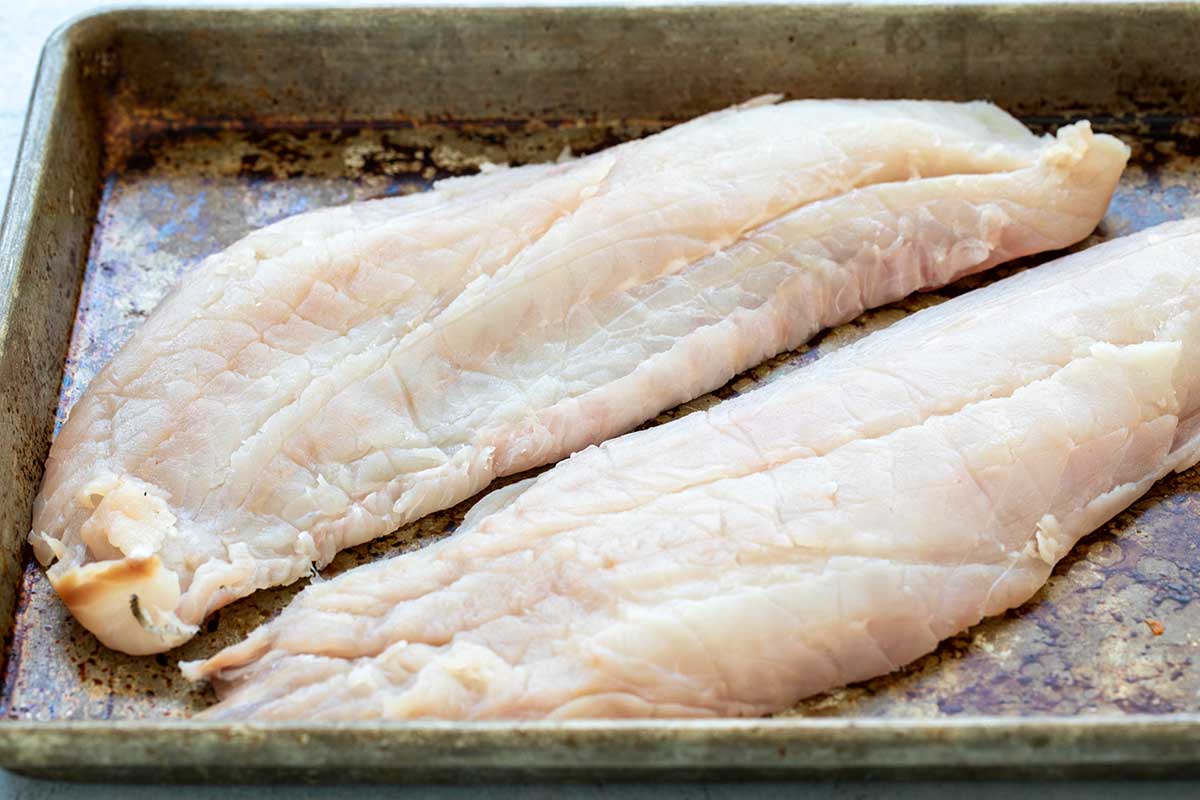
It’s essential to use high-quality fresh fish with a subtle saltwater smell and translucent, firm flesh. The unpleasant attributes will carry into the dish if you notice a strong fishy aroma or mushy texture. I recommend making the recipe the same day so the flavor stays clean and the texture solid.
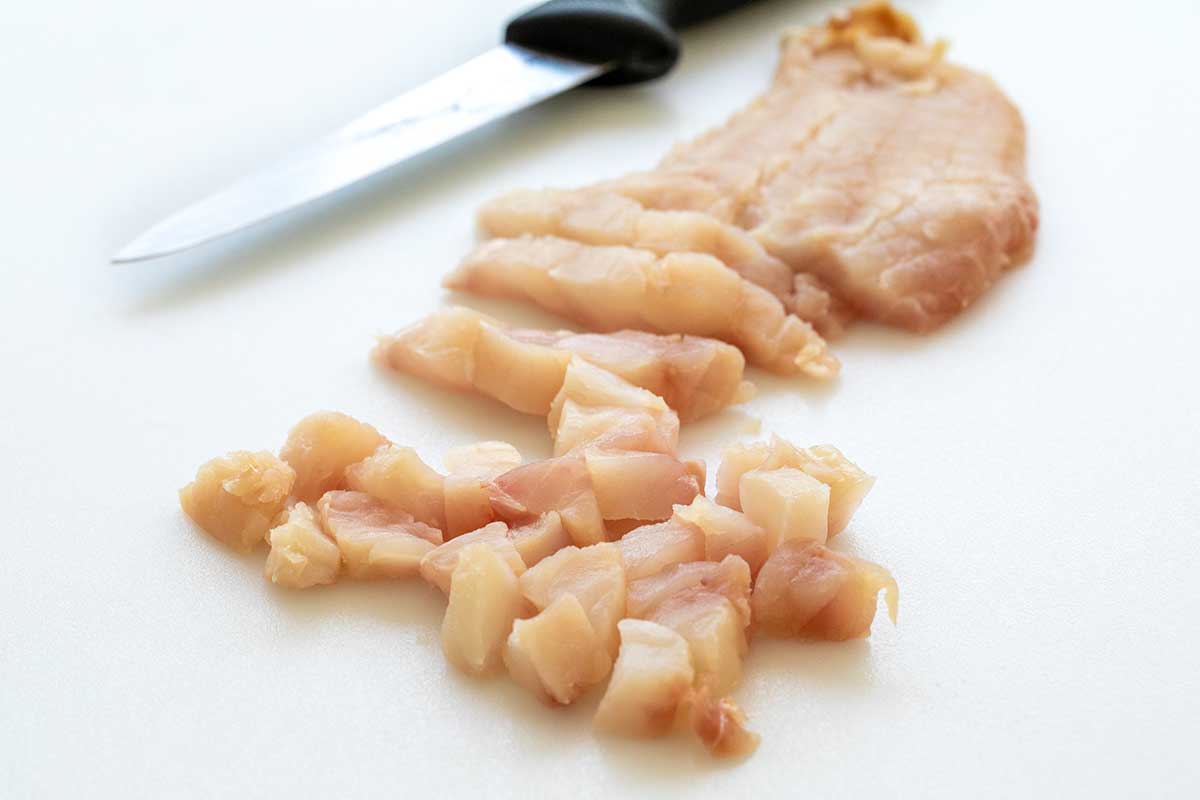
Chop the fish into ¼ to ½-inch cubes. The smaller the size, the quicker the marination time, and the more evenly cooked through it will be.
Pro Tip: After purchasing the fish, wrap it in plastic wrap or place it in a resealable bag. Place it in a bowl with ice or ice packs above and below to keep it super cool and delay the breakdown of the flesh. Fish stored below 40°F (4°C) helps to inhibit microbial or parasitic growth.
Step 2: Marinate the Fish
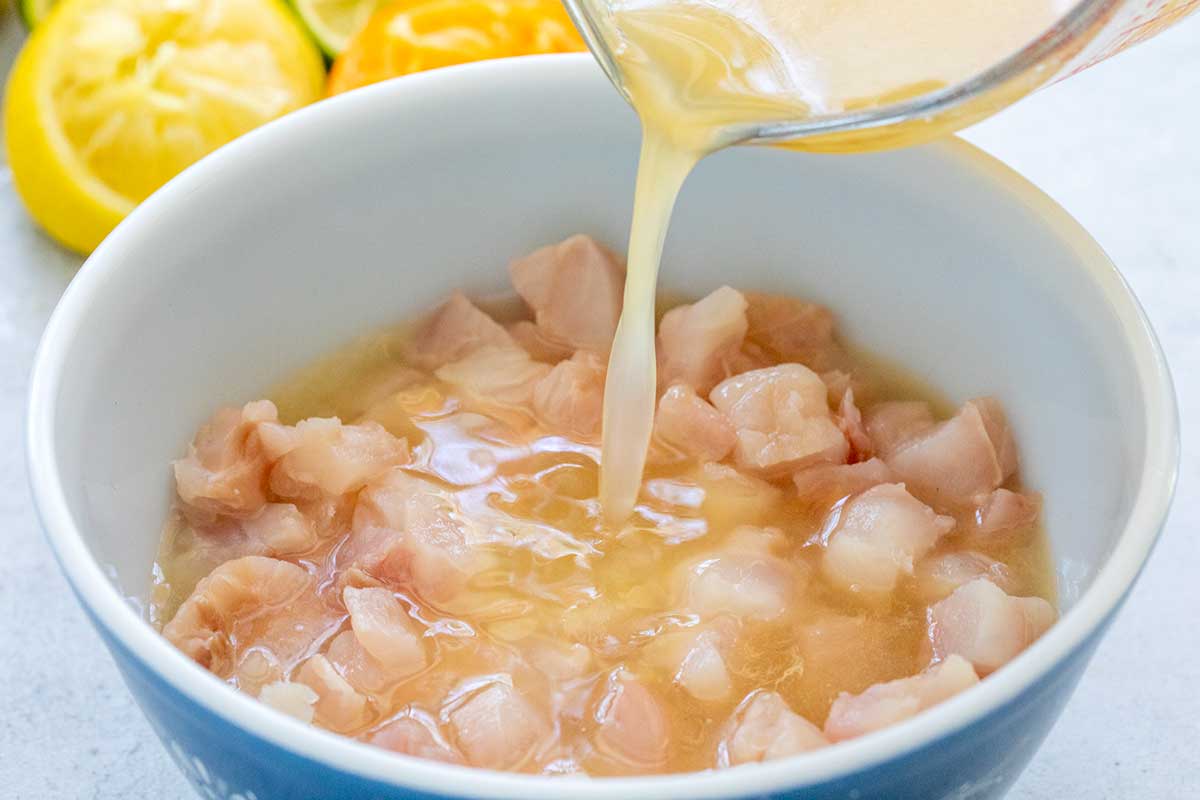
Marinate the fish in the citrus juice mixture, ensuring the pieces are completely submerged. Make sure to stir halfway through the process to ensure the surface comes into contact with the liquids for even soaking.
You’ll notice an apparent change on the surface within minutes of adding the chunks of raw fish to the acidic juices. The fish is ready once the surface is opaque, and it’s up to you if you like a slightly raw center or a completely firm one. Marinate longer for the latter. It will take at least 30 minutes and up to 2 hours.
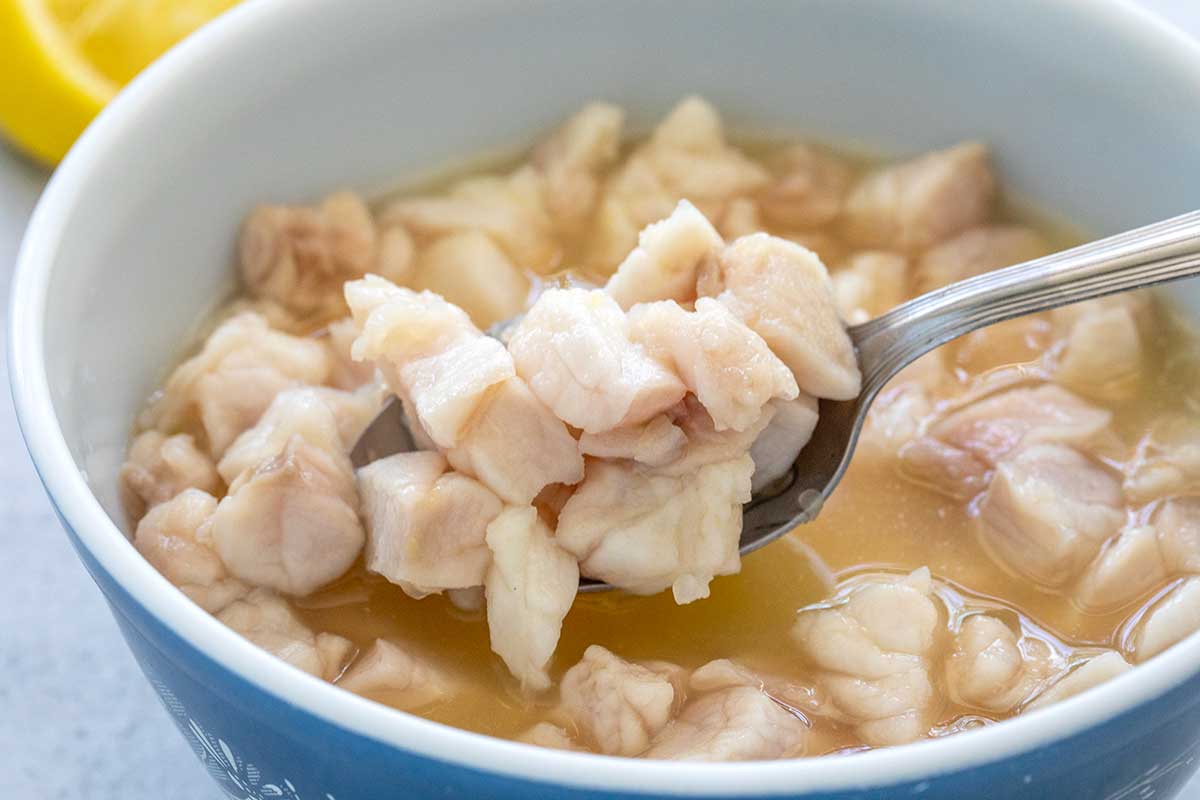
Ingredient Chemistry: To be clear, there is no actual cooking with heat happening. The high concentration of acids in limes and lemons helps to “cook” the fish as it marinates. Citric acid, naturally contained in the fruit, denatures and unravels the fish protein, then coagulates and compacts them together. You’ll notice that the flesh turns opaque on the surface and becomes firmer in texture. It’s a delicate process that retains the mild flavor of the seafood.
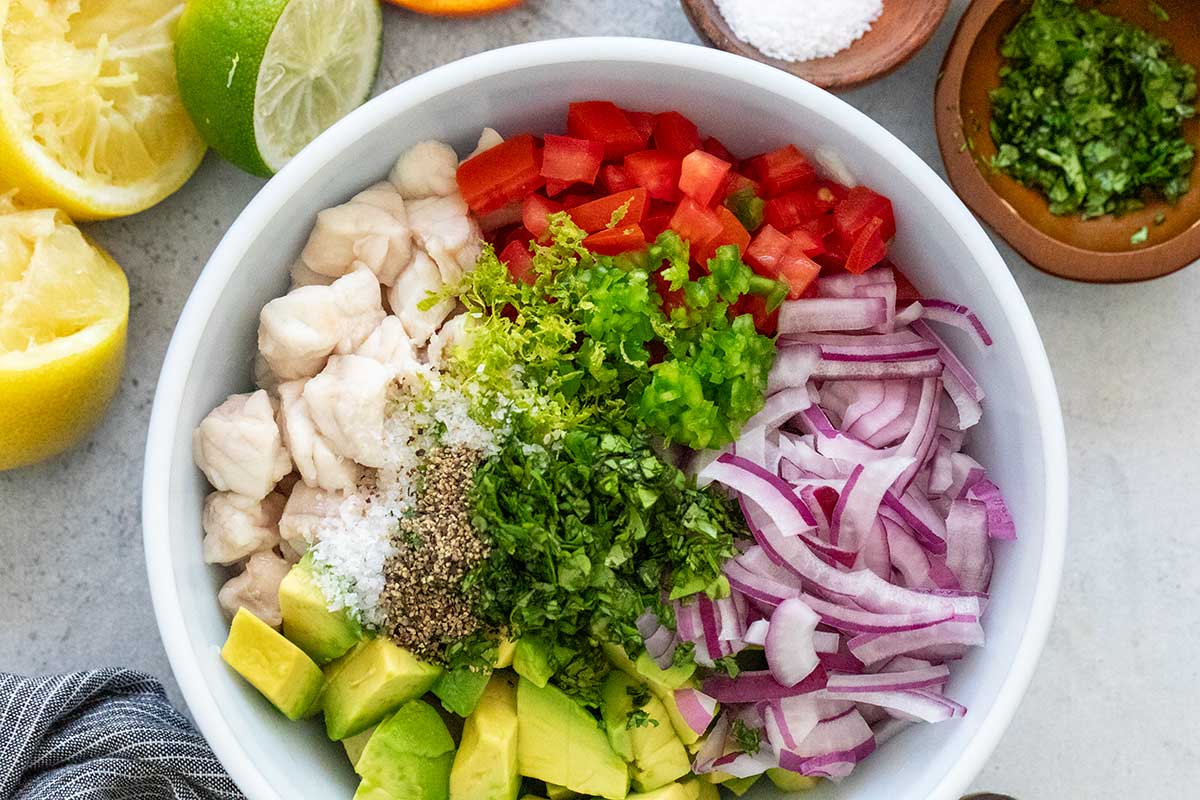
Step 3: Add the Mix-ins
After marinating, stir in the fresh citrus juices, tomatoes, red onions, jalapeño, fresh cilantro, lime zest, avocado, salt, and black pepper.

Step 4: To Serve
Taste the ceviche and adjust the seasonings as needed. I like to serve it as an appetizer with crunchy tortilla chips or plantain chips. You can also spoon some on top of a tostado as a main dish.
Frequently Asked Questions
Seafood ceviche is thin slices or small cubes of fresh raw seafood soaked in an acidic citrus marinade. The acidity cooks the dish instead of using heat. The critical thing to look out for is the change of the flesh from translucent to opaque as it marinates in the acid. Different types of seafood can be used, such as white fish, scallops, or crustaceans (like shrimp) for shrimp ceviche, or a mixture. Mix-ins like tomatoes, avocado, bell pepper, crunchy cucumber, radish, spicy hot sauce, or chile peppers can be used to customize the dish. It’s a popular dish in Latin America, including Mexico, and in South America, including Peru and Ecuador. Each region has its unique twist.
Avoid purchasing freshwater fish such as tilapia, trout, catfish, walleye, perch, bass, or cod, as they may be more susceptible to parasitic infections.
How long the ceviche should be marinated depends on how you like the texture. The exterior should turn opaque and off-white. However, the center can be slightly translucent, like raw sashimi, or completely opaque. This could take anywhere from 30 minutes to 2 hours. Marination time is dependent on how thin the fish is cut. To test, cut a cube in half to see the color contrast.
There’s always a risk when consuming raw fish, but you can take precautions. The fish must be extremely fresh or purchased frozen and properly defrosted in the refrigerator to reduce the risk of microbial pathogens and parasites. If using tuna or salmon, try to purchase sushi-grade fish. The low acidity of lemons and limes (pH below or equal to 2.5) reduces microbial numbers in the raw fish, but not all like heat does. Keep the prep area clean, avoid cross-contamination, and prepare and eat the same day.
More Appetizer Recipes


If you tried this Fish Ceviche Recipe, please leave a 🌟 star rating and let me know how it went in the 📝 comments below!
Classic Ceviche

Ingredients
- 1 pound red snapper, halibut, sea bass, grouper, or flounder
- 1 cup lime juice, divided
- ¼ cup lemon juice, divided
- ¼ cup orange juice, divided
- 1 cup diced tomatoes, ¼" dice
- ½ cup thinly sliced red onion, ⅛" thick and 1" long
- 2 tablespoons chopped cilantro
- 1 tablespoon minced jalapeno
- 1 teaspoon lime zest
- 1 cup diced avocado, ½" dice (about 1 large avocado)
- ¾ teaspoon kosher salt
- ¼ teaspoon black pepper
Instructions
- Prepare the Fish – Remove the skin if still intact. Cut the snapper filets into ½-inch cubes; there should be about 2 cups. For quicker cooking, cut fish into ¼-inch cubes. Transfer to a non-reactive medium-sized bowl, like glass or ceramic.
- Marinate the Fish – Add ¾ cup lime juice, 2 tablespoons lemon juice, and 2 tablespoons orange juice to the bowl. The fish should be submerged in the juices. Cover and marinate in the refrigerator until the surface is opaque, about 30 to 45 minutes, stirring halfway through. Marinate up to 2 hours for larger pieces. Drain the juices.
- Add the Mix-ins – To the drained fish, add ¼ cup lime juice, 2 tablespoons lemon juice, 2 tablespoons orange juice, tomatoes, red onion, cilantro, jalapeno, lime zest, avocado, salt, and pepper. Stir to combine.
- To Serve – Taste and season with more salt and pepper as desired. Serve with chips or on top of tostadas.
Notes
- Recipe Yield: 4 cups
- Serving Size: ½ cup
- Marinating: For ½-inch-sized cubes, marinating takes about 20 to 30 minutes for a firm surface with a tender center, or 45 to 60 minutes for a more solidified texture. For the acidity to fully firm up the center, about 1 ½ to 2 hours is enough. For a quicker soak, chop the fish into smaller ¼-inch size cubes, and after 20 minutes, taste a piece every 5 minutes. Cut the cubes in half to check for doneness.
- For the Best Taste: Enjoy the ceviche within one day of preparing.
Nutrition Facts
Percent Daily Values are based on a 2000-calorie diet. All nutritional information is based on estimated third-party calculations. Each recipe and nutritional value will vary depending on the brands you use, measuring methods, and portion sizes per household.


Bev says
I made the shrimp ceviche which was very good. I enjoyed that a lot. My question to you is, since you poached the shrimp for a few minutes, could you not do this with the other white fish instead of just having the fish raw? I would be interested in trying this. I do understand what the purpose of making a “ceviche” is, and the point is to marinate it raw, and let the acidic juices “cook it” but I would feel better if it was a little poached.
Mark Lambie says
It’s technically not raw but I wouldn’t do this with store-bought fish. I only do it it with my fresh caught snook.
soledad says
hola jessica tienes un muy buen blog soy hopacusica profunda y solo me comunico por lengua de selas abrazos